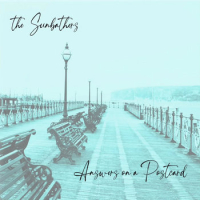
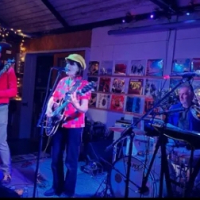
I sincerely doubt that I've successfully concealed my admiration for and enjoyment of the music of King of the Alps from readers. Therefore, the enthusiasm you're about to be hit with for their upcoming EP (it's out next Friday, the 30th October) ‘Chasing Time' shouldn't surprise you.
Paul & Simon have been reporting on progress with the new material for quite some time, whetting my appetite & occasionally causing me to hassle them. Relocation, health issues & playing with other bands no doubt have been relevant factors in the length of its gestation but I'd also suggest that sense of perfectionism they always display too.
The songs you'll be hearing are called "At the End of the Day", "Chase the Fear", "Nothing Will Ever Be the Same", "Tingle Down My Spine" and "You Fools".
If you want an exhaustive list of reasons I like their music, please go back through all my previous reviews on the subject to save the tedium of repetition: a fault they could never be accused of. There is a distinct thread through the King of the Alps DNA which makes their sound recognisable (something around how they manage a tightrope balance between sonic experiment and instinctive melodicism perhaps) but they seem determined to ensure that no release sounds like the previous ones (this was The Beatles' methodology so it has a noble tradition).
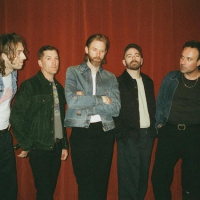
Hence although they've ever had a core duo of Paul singing & playing guitars, keyboards & drums etc with Simon on bass, most things they've put out have also featured third members playing a range of instruments including Dolores Pittaway on accordion, Glyn Finch on guitar, vocalist Sally Laws and guests Izzie Derry and Ellie Gowers who joined them on individual tracks. Each one brought a distinctive contribution and shaped the tracks they appeared on. Now on this EP they are joined by Holly Maries on backing vocals to similar effect.
However this time, changes to their arrangements & compositions has been affected (alas) by circumstances beyond their choice as the pain Paul has been experiencing for some years has finally obliged him to give up playing guitar: which has tended to be what he's been using to write and which features in all their concerts.
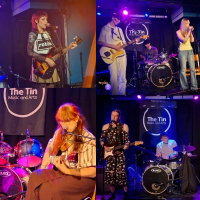
Quite apart from his soldiering on for longer than I first anticipated (you will have seen him playing guitar at the ‘Hot Music Live Presents' fundraiser as recently as June 2025 and two songs on the EP were written on one: presumably the last by this method), I admire how positively he's seeing this as it means he'll be using keyboards going forwards which will send the songs in new directions (again there is a Beatles parallel as John Lennon deliberately switched to piano to write to change his method and sound).
And when you see them play live next, look out for him using an electronic melodica with effects.. if that doesn't alter how they sound, what else could?
It also means that the three other tracks on ‘Chasing Time' originated in basslines from Simon: something they've been exploring of late for example on their song "Happy Christmas: All Will Be Fine" from 2020.
So it's a lot of change in King of the Alps' world but lyrically their favoured themes continue to be explored: not least in their sorrow and concerns over the foolishness of certain elements of society. On this occasion it's articulated on "You Fools", a sombre and doom-laden guitar led whisper in the ear of the misguided.
Elsewhere the vocals rise from this level of personalised confidential delivery and the instrumental settings gain in prominence accordingly: to excellent effect. Given that bass guitar represents 50% of the non-vocal parts of so many of their gigs and never less than a third, it's interesting how much more bass centred some of these arrangements are compared with past recordings. But that's not all. I would say that I can't remember drums being as noticeable to the extent they are here: and drums were the instrument Paul came to popular prominence playing with The Giraffes. Are King of the Alps now a drum & bass band? Well probably not in the accepted genre sense but otherwise they certainly are.
And keyboards take centre stage too on certain tracks: possibly "Nothing Will Ever Be the Same" is the epitome of the sort of song they'll be creating from this point and yes it's definitely not retreading any previous sound you've enjoyed from them in the past.
In fact what is also worth commenting on is how when Paul wants to give an element prominence in the mix, he scarcely holds back: you get to hear each part really clearly. Part of this may lie in his being so pleased with the space created by not having a guitar track. It certainly creates room for other ingredients while still leaving each one with its own pocket of absence of sound in which to resonate. While the bass possibly benefits the most from this, giving it a beautiful dubwise role, all the other parts are only just behind it in getting their place in the sun & exploiting it.
There is also a sample on "At the End of the Day" which serves as a background element and adds to the dub effect: I leave it up to you to identify what it might be.
Taking the title alone, it's tempting to see this collection as a Proustian one. I'm sure the songs are informed by mature experience and there is the constant sense of wise advice being offered to the listener but it's no nostalgia fest nor sour judgement of contemporary life from someone who thinks life was better back in the day. It's not really a group of songs from the perspective of someone who regrets not having enough time left to achieve all they want, though I accept that some of the lyrics might support that reading.
You can pick out (in addition to the "you can do better than that" theme mentioned earlier) some musings on mental health and reasons for optimism as much as the reverse
King of the Alps love and seek beauty wherever they can (such as in the "Beauty of the Rain") and regret when it's damaged or lost (check out their ‘Beauty Scarred' EP) whether in nature or the human soul.
‘Chasing Time' is full of beauty, both sonic & in its sentiments and each of its quintet of tracks has the potential to lodge itself firmly into your mind (right now "Tingle Down My Spine" is doing just that).
For various reasons which may include their penchant for experiment and the fact that they don't play too often, the band probably are considered to have a cult status, which I'm sure reflects their level of respect & the regard in which they are held by the most discerning of local music lovers, but if you listen to their songs, including these new ones, I really can't see why mainstream media wouldn't embrace them as well. I live in hope.
This is a new chapter for King of the Alps but the story & the quest for beauty endure.